
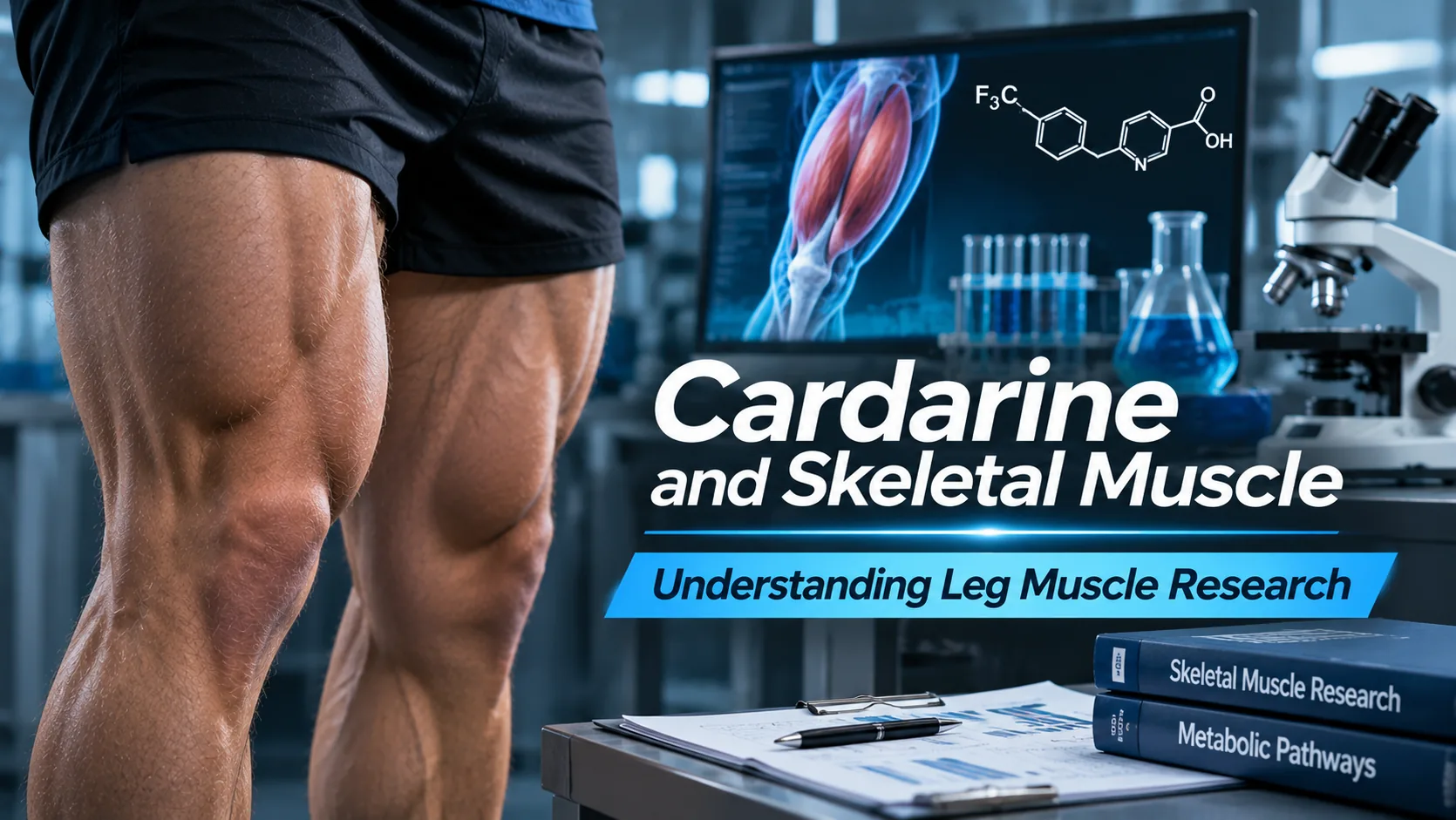
Leg training is one of the most demanding aspects of bodybuilding. From heavy squats and leg presses to high-repetition isolation exercises, developing the lower body requires considerable effort, energy and consistency.
But beyond conventional training methods, skeletal muscle is also a fascinating area of scientific investigation.
One compound that has attracted attention in this field is Cardarine (GW-501516), particularly because of its relationship with cellular energy metabolism and the biological processes involved in muscle activity.
So what makes this research interesting, and why does skeletal muscle feature so prominently in discussions surrounding Cardarine?
Why Skeletal Muscle Attracts Scientific Interest
The quadriceps, hamstrings and glutes contain some of the body’s largest skeletal muscles.
These muscle groups play a major role in movement, strength production and energy expenditure, making them important subjects in metabolic research.
During demanding exercise, skeletal muscle uses a combination of carbohydrates and fats to meet its energy requirements.
Researchers have long been interested in understanding how muscle cells adapt to changing energy demands and how different biological pathways influence this process.
This is where Cardarine enters the discussion.
Cardarine and Muscle Energy Regulation
Cardarine is an investigational PPARδ agonist, rather than a conventional selective androgen receptor modulator (SARM).
PPARδ is involved in regulating genes associated with energy metabolism, including pathways relating to fatty-acid utilisation within skeletal muscle.
Preclinical investigations involving GW-501516 have examined how activating these pathways influences metabolic activity and muscle-cell characteristics.
These findings have contributed to scientific discussions surrounding muscle energy regulation, although they do not establish that Cardarine increases strength, endurance or muscle development in humans.
Muscle Fibres and Metabolic Adaptation
Skeletal muscle contains different fibre types, each with distinct characteristics.
Slow-twitch fibres are generally more fatigue-resistant and rely heavily on oxidative energy production, while fast-twitch fibres are associated with higher-force movements.
Research into PPARδ signalling has explored its relationship with oxidative muscle characteristics and adaptations associated with energy metabolism.
Some animal studies have observed changes in muscle-related metabolic markers following experimental PPARδ activation.
This makes the pathway scientifically interesting, particularly when examining how muscle tissue responds to different energy demands.
However, these findings should not be interpreted as evidence that Cardarine directly increases leg muscle size or improves bodybuilding performance.
What About Leg Training and Muscle Development?
Building well-developed legs depends primarily on established training principles.
Progressive overload, appropriate exercise selection, sufficient nutrition and adequate recovery remain central to muscular development.
While Cardarine has been investigated for its effects on metabolic signalling, it has not been demonstrated to improve quadriceps growth, accelerate muscle recovery or preserve muscle mass during dieting in humans.
For practical advice on developing your quadriceps through exercise selection, read our Quad-Focused Leg Training: Three Techniques for Better Development.
This provides a useful distinction between established bodybuilding techniques and experimental scientific research.
Cardarine Research Quality at Affordable Nutrition UK
When examining specialist research compounds, accurate identification, purity and analytical documentation are important considerations.
At Affordable Nutrition UK, our emphasis is on independently tested research materials, transparent product specifications and accessible analytical information.
Our Cardarine (GW-501516) research capsules contain 10mg per capsule, with 60 capsules per bottle and supporting Certificates of Analysis available through the product’s Data Sheets section.
These documents provide information about the tested material’s identity and reported purity, supporting greater analytical transparency.
Product purity does not establish safety or suitability for human consumption.
Understanding the Wider Research
The relationship between PPARδ activity and skeletal muscle metabolism represents one aspect of Cardarine’s broader research background.
Its experimental history also includes investigations into lipid metabolism, energy regulation and other metabolic pathways.
For a more comprehensive examination of these subjects, explore our Cardarine Research Guide: History, Mechanisms and Scientific Findings.
Cardarine’s pharmaceutical development was discontinued following serious cancer-related findings in animal studies, and the compound remains unapproved for human use.
Final Thoughts
Cardarine’s relationship with skeletal muscle energy metabolism makes GW-501516 an interesting subject within preclinical research.
Investigations involving muscle fibre characteristics, oxidative pathways and cellular energy regulation have contributed to a better understanding of PPARδ signalling.
However, these findings remain distinct from established benefits for leg development or athletic performance.
For bodybuilders, consistent training and effective recovery remain the foundations of lower-body development, while Cardarine continues to be discussed within the context of investigational metabolic research.
Research Use Only: Cardarine (GW-501516) is an investigational compound not approved for human consumption. Serious cancer-related findings have been identified in animal studies. Its safety and effectiveness in humans have not been established.