
Important Research Notice
YK-11 is discussed in this article strictly within a laboratory and educational research context. It is not approved for human consumption, is not a dietary supplement, and is not a medicine. All information provided is for research reference purposes only and should not be interpreted as medical advice, usage guidance, or expected outcomes.
Introduction
YK-11 is frequently grouped alongside selective androgen receptor modulators (SARMs), yet its classification remains a subject of discussion within scientific and research circles. Unlike more extensively studied compounds, YK-11 occupies a less clearly defined position in the research landscape, prompting questions about whether it should be considered a “true” SARM or something distinct.
This article explores how YK-11 is referenced in scientific literature, how it compares structurally and mechanistically to classical SARMs, and why researchers often treat it as a unique investigational compound rather than a conventional member of the SARM category.
What Defines a ‘True’ SARM in Research?
In research contexts, SARMs are typically characterised by:
Selective binding to androgen receptors
Tissue-specific signalling observed in controlled models
Reduced interaction with non-target androgen-sensitive tissues
Distinct pharmacological profiles compared to anabolic steroids
Compounds such as Ostarine (MK-2866), LGD-4033, and RAD-140 are commonly referenced as examples due to their more extensive pre-clinical and clinical investigation history.
YK-11, however, is often discussed separately.
How YK-11 Differs Structurally and Mechanistically
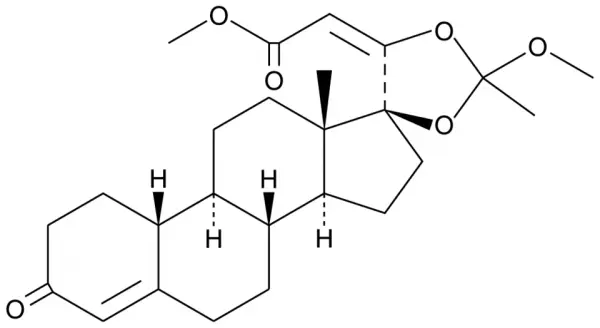
From a molecular standpoint, YK-11 is structurally derived from steroidal backbones rather than the non-steroidal frameworks associated with most classical SARMs. This distinction alone places it outside the typical SARM classification used in pharmacological research.
In laboratory discussions, YK-11 is often described as:
Exhibiting partial androgen receptor agonist activity in vitro
Displaying signalling behaviour that differs from conventional SARMs
Appearing in early-stage mechanistic studies rather than large clinical trials
These differences are why researchers frequently refer to YK-11 as SARM-like, rather than categorically defining it as a true SARM.
YK-11 and Myostatin-Related Signalling in Research
One reason YK-11 continues to attract research interest is its appearance in exploratory studies examining pathways associated with myostatin signalling. Myostatin is a regulatory protein involved in muscle tissue signalling and cellular growth regulation.
It is important to emphasise that:
Most references to YK-11 and myostatin originate from cellular or in vitro research
These studies focus on biological signalling mechanisms, not outcomes
Human data remains extremely limited
As such, discussions around YK-11 and myostatin remain firmly within early-stage research frameworks.
Why Researchers Treat YK-11 as a Separate Category
Because YK-11 does not neatly align with classical SARM definitions, researchers often treat it as a distinct investigational compound. This cautious approach reflects:
Limited clinical data availability
Structural differences from non-steroidal SARMs
A narrower evidence base compared to better-studied compounds
In scientific literature, this distinction helps prevent over-generalisation and supports clearer interpretation of experimental findings.
Availability of Research Literature
Published scientific literature discussing YK-11, androgen receptor interaction, and related signalling mechanisms can be accessed via the PubMed database, which indexes peer-reviewed biomedical research.
Researchers reviewing YK-11 are encouraged to evaluate study design, model type, and limitations carefully, given the early stage of available data.
Conclusion
While YK-11 is frequently grouped with SARMs in informal discussions, research literature suggests it occupies a more nuanced position. Structural differences, limited clinical data, and distinct signalling behaviour mean it is often treated as a SARM-like investigational compound rather than a true SARM.
Understanding these distinctions is essential for accurate interpretation of research findings and responsible scientific discussion. As with many emerging compounds, ongoing investigation and cautious evaluation remain central to how YK-11 is approached within laboratory research environments.
Further Reading
For additional educational context on SARMs and related research discussions, the following articles may be of interest:
YK-11 Explained: What the Research Suggests About Its Unique Mechanism
An educational overview examining how YK-11 appears in laboratory research discussions and signalling pathway analysis.
Top 5 SARMs Researchers Are Studying in 2025
A broader look at which SARMs and SARM-like compounds are most frequently referenced in current scientific literature.
Ostarine vs LGD-4033: A Researcher’s Guide to Muscle Retention
A comparative research discussion examining how classical SARMs are studied within controlled experimental models.
(All articles are provided for educational and research reference only.)