
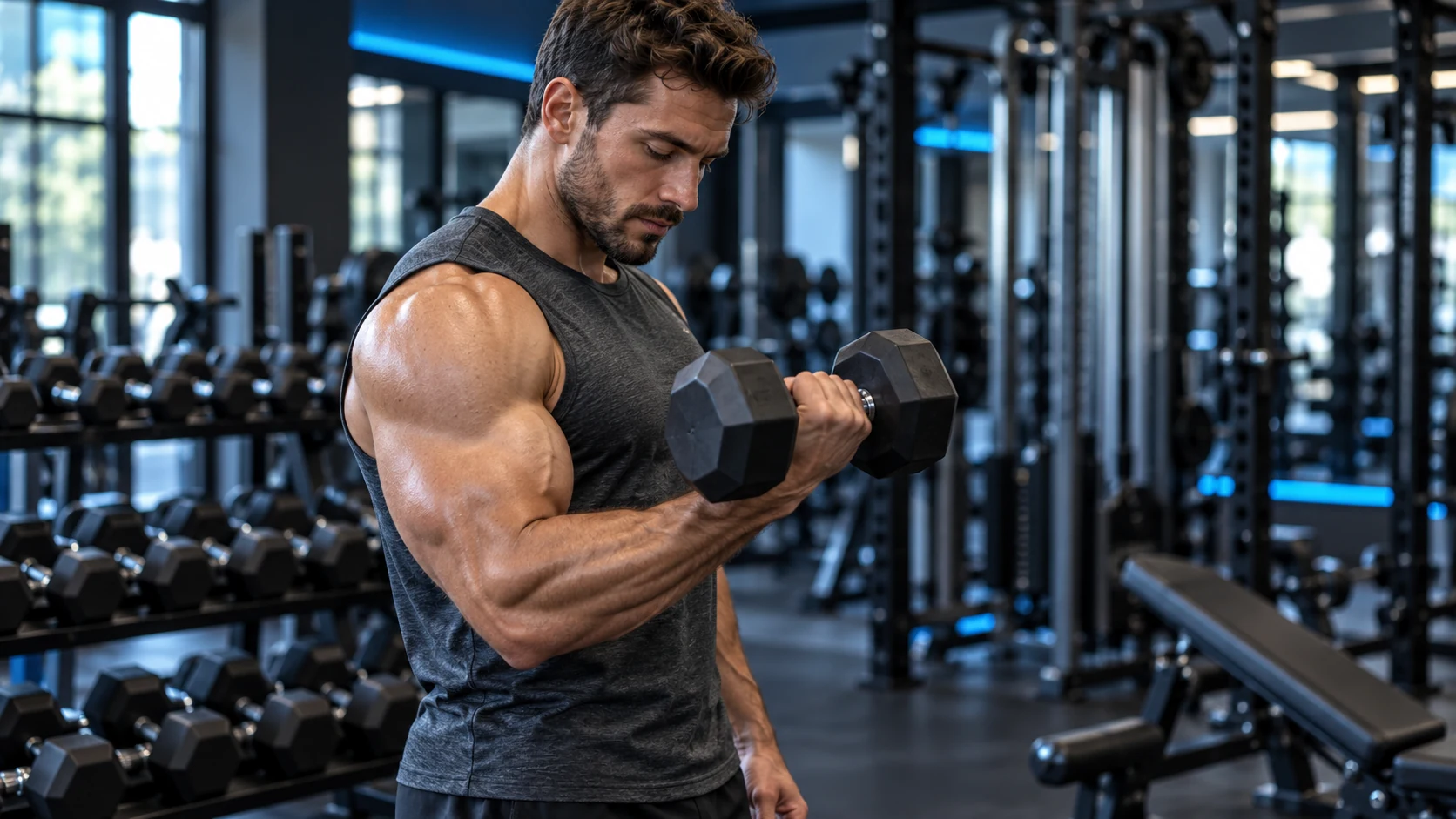
There’s nothing more frustrating than putting consistent effort into your training, only to find that certain muscle groups simply aren’t developing as quickly as the rest of your physique.
For many bodybuilders, the upper arms can be particularly stubborn.
If your biceps and triceps aren’t progressing as you’d like, the answer might not be heavier weights or endless additional sets. Sometimes, a simple change to your training split can make all the difference.
One approach I’ve found particularly worthwhile is dedicating an entire training session to your arms, rather than always training them after larger muscle groups.
Give Your Arms the Attention They Deserve
Biceps and triceps are frequently trained alongside larger muscle groups, such as back, chest and shoulders.
While this approach works well for many people, it also means your arms may already be fatigued before you begin training them directly.
By introducing a dedicated arm session, you can approach both muscle groups feeling physically and mentally fresh.
The objective is straightforward: give your biceps and triceps your full attention, maintain proper technique and challenge them with sufficient training intensity.
There are two particularly effective ways to structure this approach.
Method 1: Alternate Biceps and Triceps Priority
Rather than always following the same exercise order, try alternating which muscle group receives your attention first.
Week 1 – Biceps Priority
-
Begin with your biceps exercises while you’re fresh.
-
Follow with your triceps routine.
-
Aim for approximately 10–15 working sets per muscle group, adjusted to your experience and total weekly training volume.
Week 2 – Triceps Priority
-
Start with your triceps exercises.
-
Follow with your biceps routine.
-
Maintain a similar overall training structure.
This simple rotation allows each muscle group to receive priority on alternating weeks.
It’s a straightforward way to introduce variety while preventing one muscle group from continually receiving the leftovers of your training energy.
Method 2: Biceps and Triceps Supersets
For those who enjoy a more intense approach, alternating biceps and triceps exercises through supersets can be particularly challenging.
A superset involves performing two exercises consecutively with little or no rest between them.
For example:
Exercise 1: Preacher Curls – Biceps
Immediately followed by:
Exercise 2: Triceps Pushdowns – Triceps
Keep the transition between exercises short, ideally around 10 seconds where practical, before taking a suitable rest period.
You can repeat this approach using three or four different exercise pairings throughout your session.
The aim is to maintain controlled repetitions and suitable resistance while introducing a different training challenge.
For experienced trainers, approaching technical failure on selected working sets can increase the difficulty, although taking every set to failure isn’t necessary for muscle development.
For more advice on controlling resistance, improving exercise execution and achieving effective muscle overload, read our Training Technique: Building the Foundations for Muscle Growth guide.
Why a Dedicated Arm Day Can Work
One of the biggest advantages of introducing a separate arm session is that it may also improve the structure of your other workouts.
When training chest, back or shoulders, you can concentrate fully on those larger muscle groups without feeling the need to preserve energy for additional biceps or triceps exercises afterwards.
Likewise, your dedicated arm session allows you to focus entirely on exercise execution, muscle engagement and progressive overload.
This approach can be particularly useful when arm development has become a priority.
However, remember to account for the indirect arm training already performed during pressing and pulling exercises, ensuring your overall weekly volume remains manageable.
Getting the most from demanding arm workouts also means paying attention to recovery. Our Post-Workout Nutrition: Recovery & Muscle Growth guide explores the importance of carbohydrates, protein and a consistent recovery routine.
Don’t Neglect Your Triceps
When people think about building bigger arms, the biceps often receive most of the attention.
However, the triceps make up a substantial proportion of upper-arm muscle mass and deserve equal consideration.
With three distinct heads, the triceps benefit from a varied exercise selection that challenges them through appropriate movement patterns.
Consider incorporating exercises such as:
-
Close-grip bench presses
-
Cable triceps pushdowns
-
Overhead triceps extensions
-
Lying triceps extensions
Combine these with effective biceps exercises, including curls and preacher curls, to create a balanced arm-training routine.
The goal is to develop both muscle groups rather than concentrating exclusively on impressive biceps.
Preparation for Demanding Arm Workouts
Getting the most from a challenging arm session begins with adequate preparation.
A suitable pre-training meal, good hydration and a clear workout plan can help you approach your session with greater consistency.
Some experienced gym-goers also incorporate specialist pre-workout supplements into their training routines.
Our VIBE Rocket Pop Pre-Workout combines Citrulline Malate, Beta-Alanine, L-Tyrosine and a dual-source caffeine blend in a comprehensive pre-workout formula.
Its substantial stimulant content means it isn’t suitable for everyone, and no supplement replaces correct technique, appropriate training volume or sufficient recovery.
Final Thoughts
If your upper arms have fallen behind the rest of your physique, consider giving them a dedicated place within your training programme.
Alternating biceps and triceps priority, incorporating carefully selected supersets and maintaining consistent technique can all help introduce a fresh challenge.
Sometimes, the biggest improvements come from changing how you train rather than simply increasing the weight.
Give your arms the attention they deserve, train intelligently and allow sufficient time for recovery.
Training Notice: Exercise requirements vary according to individual experience and physical capability. Anyone with an existing injury or musculoskeletal condition should seek appropriate professional guidance before beginning a new training programme.