
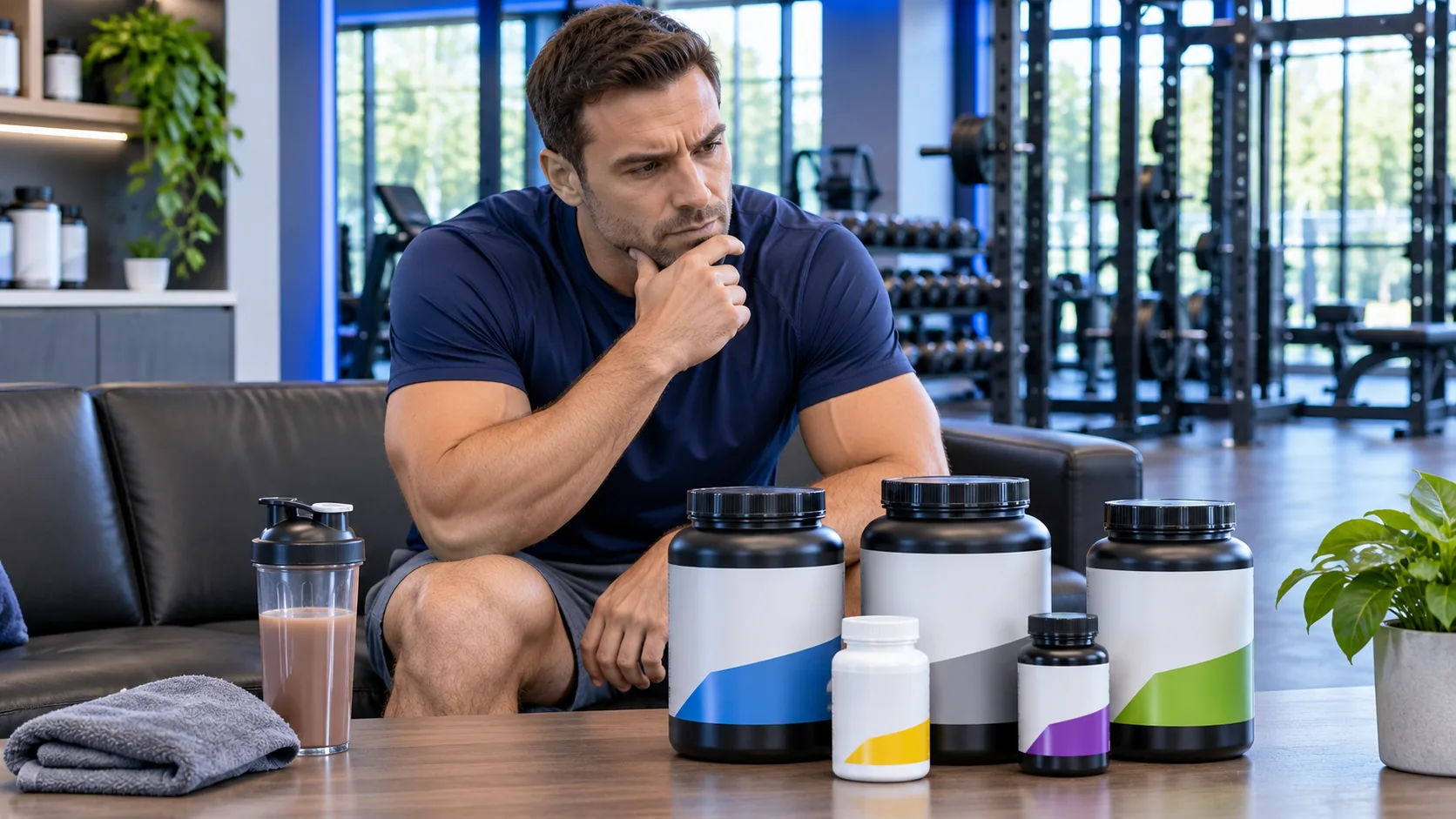
What do bodybuilders actually do after a cycle? Explore popular post-cycle approaches, common supplement ingredients, training adjustments and practical ways to maintain a consistent fitness routine.
Post-cycle therapy, commonly known as PCT, is a familiar term in bodybuilding and strength-training communities.
For years, bodybuilders have discussed different approaches to the period following anabolic steroid or SARM use, particularly when it comes to maintaining training performance, managing fatigue and returning to their normal routine.
Some favour nutritional supplements, others concentrate on reducing training intensity, while many place greater emphasis on sleep, nutrition and recovery.
But what does PCT actually involve, which ingredients are commonly discussed, and how can bodybuilders approach this period sensibly?
In this guide, Affordable Nutrition UK explores post-cycle practices commonly discussed within bodybuilding, the role of popular nutritional ingredients and the important distinction between general fitness support and the medical management of hormonal suppression.
What Is Post-Cycle Therapy (PCT)?
Post-cycle therapy describes approaches used following a period of anabolic-androgenic steroid use or exposure to other potentially hormone-suppressing compounds.
In bodybuilding circles, PCT discussions frequently centre on testosterone production, energy, libido, training performance and maintaining muscle.
The term is used broadly, however, and there is no single standardised PCT approach.
It is important to distinguish between two different concepts:
Medical hormonal recovery: The restoration of normal reproductive hormone function following suppression, which may require clinical investigation.
Post-cycle nutritional and training support: The use of dietary supplements, exercise adjustments, balanced nutrition and lifestyle habits to support general wellbeing and fitness.
These are not interchangeable.
Food supplements are not established treatments for anabolic steroid-induced hormonal suppression.
Why Do Bodybuilders Pay Attention to the Post-Cycle Period?
Bodybuilders often spend considerable time planning training schedules, nutrition and exercise progression.
The period following a cycle can introduce additional uncertainty, particularly when changes in energy, motivation, strength or physical appearance occur.
Common concerns discussed in bodybuilding communities include:
Maintaining as much muscle and strength as possible
Managing changes in training performance
Supporting adequate nutrition and recovery
Maintaining motivation and consistent gym attendance
Understanding changes in libido, mood or energy
Choosing appropriate dietary supplements
These concerns explain why PCT remains a popular subject within bodybuilding.
However, experiences vary considerably. Feeling well does not necessarily mean hormone levels have normalised, just as fatigue alone does not confirm testosterone deficiency.
What Do Bodybuilders Commonly Do for PCT?
Bodybuilding forums, training communities and personal accounts describe a wide variety of post-cycle practices.
While some involve prescription hormonal medicines, others focus on training, food intake and nutritional products.
The following approaches are commonly discussed.
1. Adjusting Training Volume and Intensity
One common approach is to reduce training demands temporarily rather than continuing to increase workout intensity indefinitely.
Bodybuilders may reduce total sets, avoid repeatedly training to failure or focus on maintaining strength with a manageable workload.
This makes practical sense when fatigue is elevated or recovery feels compromised.
A typical adjustment might involve retaining familiar exercises while reducing unnecessary training volume.
The objective is to maintain a sustainable exercise routine rather than chase personal records at every session.
2. Maintaining Protein and Calorie Intake
Nutrition is another major consideration.
Bodybuilders often concentrate on maintaining sufficient dietary protein and avoiding unnecessarily aggressive calorie deficits.
Protein provides the amino acids needed for muscle maintenance and adaptation to resistance training.
For many healthy adults undertaking regular resistance exercise, approximately 1.2–1.6 grams of protein per kilogram of body weight daily is a useful starting range.
Total calorie intake also matters.
A balanced diet containing sufficient protein, carbohydrates, dietary fats, fruit and vegetables provides a foundation for general health and training.
3. Paying Greater Attention to Sleep
Sleep is frequently overlooked during demanding training periods.
Many experienced bodybuilders prioritise consistent sleep as part of their wider recovery routine.
Practical habits include:
Maintaining regular sleeping and waking times
Limiting caffeine late in the day
Reducing alcohol consumption
Keeping the bedroom dark and comfortable
Allowing enough time for recovery between demanding sessions
Although sleep supports normal physiological function, it should not be treated as a guaranteed solution to drug-induced hormonal suppression.
4. Using Nutritional Support Supplements
Some bodybuilders also include food supplements as part of their wider post-cycle routines.
Commonly discussed ingredients include:
N-acetylcysteine (NAC)
Milk thistle
D-aspartic acid
Fenugreek
Creatine monohydrate
Zinc and vitamin B6
Selected botanical extracts
These ingredients have different characteristics and research backgrounds.
Importantly, their inclusion in a product marketed for PCT does not establish that they reverse hormonal suppression.
Understanding what an ingredient is, what it has been studied for and what claims are substantiated is more useful than relying solely on a product’s name.
Popular PCT Supplement Ingredients Explained
Many bodybuilding support formulas combine vitamins, amino-acid derivatives and botanical extracts.
Let’s look at some of the ingredients frequently encountered.
N-Acetylcysteine (NAC)
N-acetylcysteine, commonly abbreviated to NAC, is a derivative of the amino acid cysteine.
It is involved in pathways associated with glutathione production and has been investigated extensively in biomedical research.
NAC is frequently discussed in bodybuilding communities in relation to antioxidant systems and general physiological health.
However, its presence in a food supplement does not establish that the product prevents or reverses liver damage associated with anabolic steroid use.
Milk Thistle
Milk thistle (Silybum marianum) is a botanical ingredient containing compounds collectively known as silymarin.
It has a long history of traditional use and has been investigated for its biological properties.
Milk thistle remains popular in supplement formulations associated with general wellbeing.
However, evidence does not establish that ordinary milk thistle supplements prevent or repair steroid-induced liver injury.
D-Aspartic Acid
D-aspartic acid is an amino acid involved in several biological processes.
Its potential relationship with reproductive hormone regulation has attracted interest within sports nutrition research.
However, studies involving healthy, resistance-trained men have produced inconsistent results concerning testosterone concentrations.
D-aspartic acid should therefore not be regarded as a proven method of restoring suppressed testosterone production.
Fenugreek
Fenugreek (Trigonella foenum-graecum) is a plant used as a food ingredient and in traditional herbal preparations.
Fenugreek extracts appear in various sports nutrition and men’s wellbeing products.
Studies have investigated several potential effects, although findings vary by extract, population and outcome measured.
It is not an established treatment for post-cycle hormonal suppression.
Creatine Monohydrate
Creatine is one of the most extensively researched ingredients in sports nutrition.
It supports the body’s phosphocreatine energy system, which plays a role in repeated high-intensity muscular activity.
Creatine has well-established benefits for physical performance during successive bursts of short-term, high-intensity exercise, when used under the relevant conditions.
It is not a hormonal recovery treatment, but it can form part of a conventional resistance-training nutrition programme.
Vitamins and Minerals
Vitamins and minerals contribute to numerous normal physiological functions.
For example, zinc contributes to the maintenance of normal testosterone levels in the blood, while vitamin B6 contributes to the regulation of hormonal activity.
These are recognised nutrient functions, subject to the applicable conditions for authorised health claims.
However, maintaining normal hormone function is different from treating clinically significant hormonal suppression.
What About Natural Testosterone Boosters?
Products described as natural testosterone boosters are widely discussed within bodybuilding and sports nutrition.
They frequently contain combinations of botanical extracts, vitamins, minerals and amino-acid derivatives.
Ingredients such as tongkat ali, fenugreek and D-aspartic acid are commonly encountered in this category.
However, their evidence bases are not interchangeable.
Some ingredients have been investigated in small clinical studies, while others have limited or inconsistent human evidence.
It is also important to distinguish between maintaining normal testosterone function and restoring testosterone production following drug-induced suppression.
Consumers should assess nutritional products according to their actual ingredients, declared quantities, manufacturing information and substantiated claims.
Can You Maintain Muscle and Strength After a Cycle?
Maintaining muscle and strength is one of the most frequently discussed concerns in bodybuilding.
However, changes in body weight or appearance do not necessarily represent changes in actual muscle tissue.
Fluid balance, muscle glycogen, calorie intake and training activity can all influence physical appearance.
A sensible approach to maintaining training progress includes:
Continue resistance training: Maintain a consistent exercise routine appropriate to your current recovery capacity.
Consume adequate protein: Meeting daily protein requirements supports normal muscular adaptation.
Avoid extreme dieting: Rapid calorie restriction can make it harder to maintain performance and lean mass.
Prioritise sleep: Consistent sleep supports normal recovery and wellbeing.
Track meaningful progress: Monitor training performance, body weight trends and general health rather than judging progress from a single workout.
These practices are relevant to strength training generally, not just to the post-cycle period.
How Do Bodybuilders Choose PCT Support Supplements?
When evaluating nutritional products, experienced consumers often look beyond the front label.
A useful comparison considers several practical factors.
Ingredient Transparency
A clear supplement label should identify the ingredients and their declared quantities.
This makes it easier to compare formulas and understand what a product contains.
Clearly Defined Servings
Serving sizes and the number of servings per container help consumers evaluate the intended use and overall value of a product.
Manufacturing and Supplier Information
Customers may also wish to review available manufacturing information and the supplier’s approach to product quality.
Quality claims should relate to the actual product and should be supported by appropriate evidence.
Value for Money
Cost per serving is often more useful than comparing container prices alone.
A product with a lower purchase price may not necessarily provide the same number of servings or ingredient quantities.
Appropriate Expectations
Perhaps most importantly, nutritional supplements should be viewed within the context of a balanced diet and general fitness programme.
They should not be relied upon to treat hormonal suppression or other medical conditions.
Frequently Asked Questions About PCT Supplements
What does PCT stand for in bodybuilding?
PCT stands for post-cycle therapy. Bodybuilders use the term to describe various practices following anabolic steroid or other hormone-suppressing drug use, including medical interventions, changes to training and nutritional support.
Do all bodybuilders use PCT?
No. Practices vary widely. Some individuals report using hormonal medications, others use food supplements, and some undertake no specific post-cycle intervention. These choices should not be interpreted as evidence of safety or effectiveness.
Do natural PCT supplements restore testosterone?
There is insufficient evidence that ordinary multi-ingredient food supplements reliably reverse anabolic steroid-induced testosterone suppression.
Persistent symptoms should be medically assessed.
What ingredients are commonly found in PCT supplements?
Common ingredients include NAC, milk thistle, D-aspartic acid, fenugreek, botanical extracts and selected vitamins and minerals.
Formulations vary, so checking the individual product label is important.
Is creatine useful in a bodybuilding training programme?
Creatine monohydrate is a well-studied sports nutrition ingredient that can improve performance during successive bursts of short-term, high-intensity exercise under the relevant conditions.
It does not restore suppressed testosterone production.
Can you maintain your strength after a cycle?
Strength retention varies according to training, nutrition, individual physiology and other factors.
Continuing an appropriate resistance-training programme and meeting nutritional requirements can support general muscle maintenance.
How long does hormonal recovery take?
Recovery varies considerably. Testosterone concentrations may recover over several weeks, even months.
Persistent symptoms or concerns about fertility should be assessed by a qualified healthcare professional.
Are PCT supplements the same as prescription PCT medications?
No. Food supplements and prescription medicines are different product categories with different regulatory requirements, intended uses and standards of evidence.
They should not be treated as interchangeable.
Final Thoughts: A Practical Approach to Post-Cycle Support
PCT remains an important topic of discussion throughout bodybuilding and strength-training communities.
The approaches bodybuilders describe are varied, ranging from changes in training and nutrition to nutritional supplements and medical interventions.
For anyone interested in bodybuilding support products, understanding the distinction between general nutritional support and the treatment of hormonal suppression is essential.
A balanced diet, appropriate resistance training, sufficient sleep and well-informed product selection provide a sensible foundation for an ongoing fitness routine.
At Affordable Nutrition UK, we believe customers should have access to clear product information, transparent ingredient listings and useful educational content that helps them make informed decisions.
Understanding ingredients, maintaining realistic expectations and prioritising long-term health are essential parts of a responsible approach to bodybuilding nutrition.
Further Reading and References
UK Chief Medical Officers’ Physical Activity Guidelines — Official guidance on resistance training and physical activity.
International Society of Sports Nutrition: Position Stand on Creatine Supplementation — Research overview of creatine and exercise performance.
Protein Supplementation and Resistance Training: Systematic Review and Meta-Analysis — Evidence concerning dietary protein and muscular adaptation.
Disclaimer: This article provides general information about bodybuilding practices, nutritional ingredients and post-cycle discussions. It does not recommend anabolic steroid use or provide a post-cycle therapy protocol. Food supplements are not treatments for hormone suppression, liver injury or other medical conditions. Seek qualified medical advice for symptoms or concerns relating to hormone levels, fertility or previous drug use.