
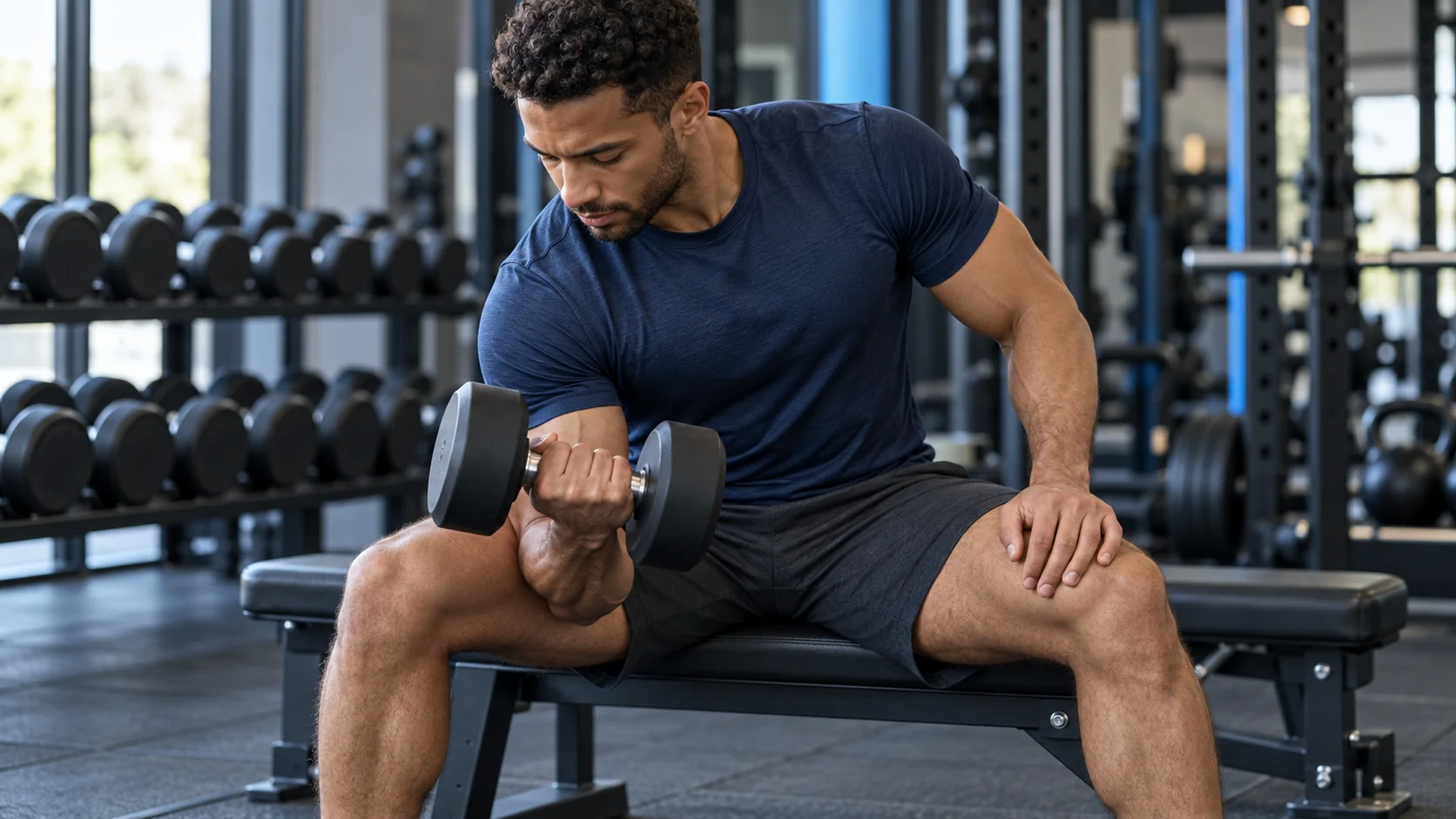
One thing I’ve learnt from years of bodybuilding is that two people can perform exactly the same exercise and experience it quite differently.
An exercise that feels outstanding for one person might feel awkward or less effective for someone else.
That’s not necessarily because either person is doing something wrong. Individual differences in body proportions, joint structure and muscular development can all influence how a movement feels.
Over the years, I’ve found that developing a better understanding of individual exercises can be just as valuable as regularly introducing new ones.
Sometimes the biggest improvements come from learning more about the movements you’re already performing.
Not Every Exercise Feels the Same for Everyone
Take a basic exercise such as the barbell bench press.
Some people find it particularly effective for training their chest, while others notice considerable involvement from their shoulders and triceps.
Similarly, certain squat variations may feel more comfortable or allow greater emphasis on the quadriceps depending on individual anatomy and technique.
This doesn’t mean that an exercise stops working simply because you don’t feel a particular muscle contracting.
It does, however, demonstrate why understanding your own movement patterns can be useful when developing a training programme.
Rather than assuming every popular exercise will suit you equally well, it’s worth discovering which variations allow you to train comfortably and consistently.
Learn More by Experimenting
When I first started bodybuilding, I was fascinated by how relatively small changes to an exercise could influence the way it felt.
Adjusting your grip, changing the angle of a movement or selecting a different piece of equipment can sometimes make a noticeable difference.
One approach I’ve found useful is occasionally dedicating part of a workout to exploring an individual exercise.
For example, consider rope triceps pushdowns.
Rather than performing excessive numbers of sets, try a few controlled sets using a manageable resistance.
Pay attention to how your elbows move, whether the exercise feels comfortable and how different positions affect the movement.
The objective isn’t to exhaust yourself or create as much muscle soreness as possible.
It’s simply to become more familiar with the exercise and understand how it fits into your training.
Small Adjustments Can Make a Difference
An exercise doesn’t always need replacing when it feels less productive than expected.
Sometimes a relatively minor adjustment is worth exploring.
For example:
-
Grip position: Different hand positions can influence comfort and muscular emphasis.
-
Range of motion: Working through an appropriate, controlled range can help you perform an exercise consistently.
-
Equipment selection: Dumbbells, barbells, cables and machines each offer different practical characteristics.
-
Body positioning: Seat height, bench angle and stance width can affect how a movement feels.
-
Exercise variation: A different version of the same movement may better suit your proportions and mobility.
These adjustments won’t necessarily produce dramatic changes, and not every variation will suit everyone.
The important thing is to approach your training with curiosity rather than simply repeating exercises without considering how they work.
For more on developing a solid foundation, read my Training Technique: Building the Foundations for Muscle Growth.
Apply What You Learn to Weaker Muscle Groups
Understanding individual exercises becomes particularly useful when you’re trying to bring up an underdeveloped muscle group.
Perhaps your quadriceps are progressing well, but your hamstrings need additional attention.
Or maybe your triceps respond consistently while your biceps seem slower to develop.
Rather than immediately increasing training volume, consider whether your current exercise selection provides a suitable combination of movements.
You may discover that certain exercises feel more comfortable, allow better control or make it easier to progress over time.
This is particularly relevant when training larger muscle groups.
Our Quad-Focused Leg Training guide explores how different leg exercises can place greater emphasis on the quadriceps.
Likewise, Are Your Arms Lagging? looks at practical ways of approaching biceps and triceps development.
Don’t Judge an Exercise by Soreness Alone
One misconception worth addressing is the belief that the more sore you feel after training, the more effective your workout must have been.
Muscle soreness can occur when introducing unfamiliar movements or increasing training demands, but it isn’t a reliable measure of muscle growth.
An exercise can be productive without leaving you particularly sore the following day.
A better approach is to consider whether you’re performing the movement consistently, progressing appropriately and achieving improvements over time.
Developing a good understanding of an exercise should make your training more productive, not simply more exhausting.
Final Thoughts
Bodybuilding has taught me that successful training isn’t always about discovering another exercise or following the latest routine.
Sometimes it’s about taking the time to understand the movements you’ve been performing for years.
Experiment with sensible variations, pay attention to how your body responds and don’t be afraid to make adjustments when something doesn’t feel right.
The better you understand your exercises, the better equipped you become to build a programme that works for you.
And in my experience, that understanding becomes increasingly valuable the longer you train.